How to Review AI Receptionist for Scheduling
May 12, 2026
Learn how to review AI receptionist for scheduling based on booking accuracy, call handling, routing, and real front-desk impact.
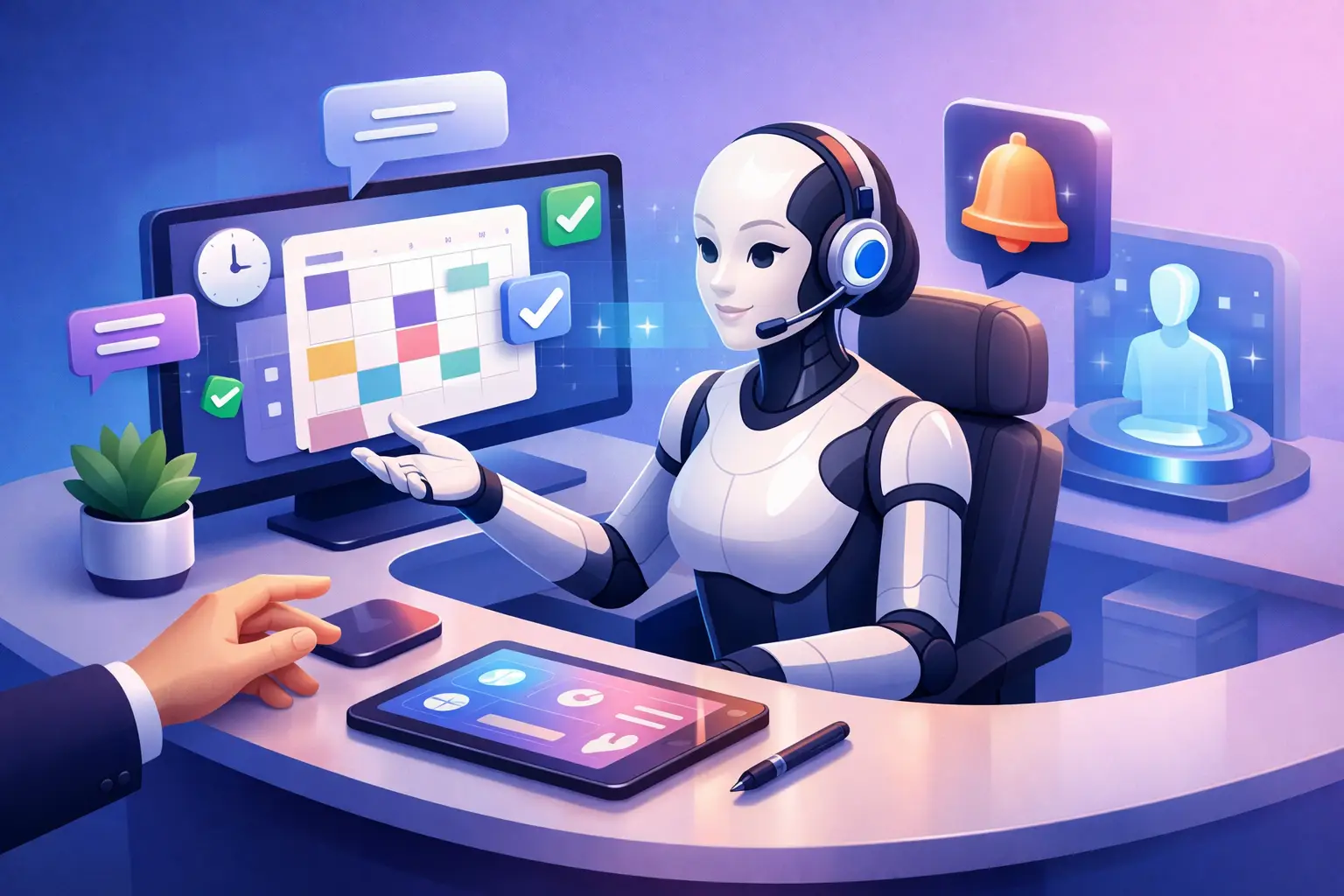
A missed call at 4:52 PM can turn into a lost appointment, a slower week, and another reminder that front-desk coverage is harder to stabilize than it should be. That is why more operators want to review AI receptionist for scheduling with the same discipline they use to evaluate payroll, phones, or practice software. If the system is going to answer inquiries and book time on the calendar, it needs to perform like infrastructure, not a novelty.
What a review AI receptionist for scheduling should actually measure
Most evaluations go wrong at the start. Teams get impressed by the voice, the speed, or the demo script, then skip the operational questions that matter once the receptionist is live. A scheduling-focused AI receptionist should be judged on whether it captures demand, books correctly, and keeps communication consistent when volume rises.
That means the review is not really about whether the assistant sounds human enough to impress staff. It is about whether it reduces missed opportunities and administrative drag without creating new cleanup work. If your office still has to fix bookings, chase confirmations, and manually sort basic inquiries, the tool is not improving the workflow. It is just relocating it.
A useful review looks at three layers at once: customer handling, scheduling accuracy, and day-to-day operational fit. If one of those breaks, the whole system underperforms.
Start with the scheduling workflow, not the AI features
Before comparing platforms, map the exact booking process your front desk handles now. How do new callers request appointments? What information has to be collected before a booking is confirmed? Which appointment types need different durations, staff assignments, or location rules? Where do no-shows usually begin - weak reminders, unclear instructions, or slow follow-up?
This step matters because scheduling is rarely one-size-fits-all. A simple service business may only need date selection, contact capture, and automated confirmations. A more complex office may need buffers between appointments, provider matching, intake questions, escalation logic, and rescheduling rules. An AI receptionist that performs well in one setting can struggle in another if the scheduling logic is too shallow.
When you review options, ask whether the system supports the workflow you already need or whether your team will have to simplify operations to fit the product. Some standardization is healthy. A forced workaround at the front desk is not.
The core test: can it book accurately under real conditions?
A good demo usually shows the best-case scenario. Real front-desk traffic is less polite. Callers mumble, interrupt, call after hours, ask side questions, need to change existing appointments, or are not sure what service they need. That is where a serious review should focus.
Look closely at how the AI handles incomplete requests. Can it clarify service type before offering times? Can it distinguish between a new patient, a returning client, and a general inquiry? Can it stop an invalid booking before it reaches the calendar? Accuracy matters more than speed if fast booking creates downstream errors.
You should also review how the system handles edge cases. Double-booking prevention, timezone clarity, holiday exceptions, provider availability, and booking limits are not minor details. They are the difference between a receptionist that lowers admin load and one that creates rework for the office manager by noon.
A strong platform should also manage reschedules and cancellations without breaking the communication chain. If customers can book easily but changing an appointment still requires staff intervention every time, the labor savings will be lower than expected.
Evaluate call handling the way customers experience it
Scheduling performance starts before the calendar opens. If callers do not feel guided, understood, and moved toward the next step, conversion drops. That is why call handling should be part of any review AI receptionist for scheduling process.
Listen for practical quality, not theatrical quality. The right system should answer promptly, keep conversations focused, collect essential details, and route exceptions cleanly. It does not need to sound flashy. It needs to be dependable.
Pay attention to whether the AI can handle common front-desk patterns without friction. That includes first-time callers asking basic questions, existing customers needing a change, and inbound leads calling outside business hours. If the system stalls when the conversation leaves the script, your team will still lose opportunities during peaks, lunch breaks, and after-hours windows.
There is also a brand standard question here. Your receptionist function shapes how customers perceive responsiveness. A system that is efficient but abrupt can hurt trust. A system that is friendly but vague can hurt conversion. The right balance is controlled, clear, and businesslike.
Integration matters more than feature count
Operators often get sold on broad AI capability when the real need is much narrower. For appointment-driven businesses, the relevant question is whether the receptionist works cleanly with the systems already running the front desk.
Calendar sync is the first checkpoint, but it should not be the only one. Review whether the platform connects with your scheduling software, CRM, phone system, intake forms, and customer messaging process in a way that keeps records current. If data has to be moved manually between tools, staff time disappears fast.
This is where focused products usually outperform general-purpose chat tools. A receptionist platform built around inquiry capture, appointment handling, and follow-up workflows tends to create fewer operational gaps than a broad conversational product that treats scheduling as just one feature. For businesses that depend on booked appointments, specialization is often a strength, not a limitation.
Measure post-booking communication, not just the booking event
The appointment is not secured when it hits the calendar. It is secured when the customer receives confirmation, understands next steps, and actually shows up. That is why reminder and follow-up workflows deserve their own review.
Look at how confirmations are sent, how quickly they go out, and whether they include the details customers need. Review reminder timing, cancellation prompts, and any re-engagement steps for missed or incomplete inquiries. A receptionist that books well but communicates poorly can still leave the office with gaps, confusion, and no-show risk.
Consistency matters here. Human teams vary by shift, workload, and training level. A scheduling-focused AI receptionist should improve reliability by making these communication steps happen the same way every time. That is one of the clearest operational gains when the system is configured well.
Judge reporting by business impact
If you cannot see what the receptionist is capturing, booking, or missing, you cannot manage it. Reporting should tell you more than call volume. It should show whether inquiries became appointments, where drop-off happened, and what kinds of requests required escalation.
For owners and operations leads, the useful metrics are practical: missed-call recovery, booked appointments, after-hours conversions, reschedule volume, lead capture rate, and staff time reduced at the front desk. Those numbers make it easier to decide whether the system is saving labor, adding capacity, or simply shifting work into a different queue.
This is also where many businesses realize the value of a purpose-built receptionist layer. The right system does not just answer. It documents, standardizes, and exposes weak points in the scheduling process.
Watch for the trade-offs before you commit
No tool is perfect for every office. If your scheduling process depends heavily on nuanced clinical judgment, highly customized quoting, or complex exception handling, you may still need more human intervention than expected. AI reception works best when the business can define clear booking rules and escalation paths.
There is also a setup question. Better outcomes usually depend on tighter configuration. Businesses that take the time to define services, call flows, booking constraints, and communication templates usually see stronger results than teams that expect the system to figure out the front desk on its own.
That is not a weakness of the model. It is part of deploying operational software well. Reliable automation comes from clear process design.
What a strong final decision looks like
A good evaluation ends with a simple standard: does the AI receptionist help your business answer more inquiries, book more appointments, and reduce front-desk strain without lowering service quality? If the answer is yes, the investment is easy to justify. If the answer is maybe, the issue is usually in workflow fit, integration quality, or weak configuration.
For service businesses that run on inbound demand, scheduling is not a side task. It is revenue handling. That is why the best review process stays close to the day-to-day realities of the front desk: speed, accuracy, coverage, follow-up, and consistency. A focused provider such as Ortuas makes sense when the goal is not generic AI adoption, but dependable appointment handling and customer communication that holds up during real operating hours.
The useful mindset is simple: do not ask whether the AI is impressive. Ask whether your calendar gets fuller, your staff gets breathing room, and your customers get answered every time.
Get tips like this in your inbox
We send practical guides on AI, automation, and growing your service business. No spam.