7 Front Desk Automation Trends That Matter
April 28, 2026
Front desk automation trends are shifting how service businesses book appointments, answer inquiries, and cut missed calls without adding staff.
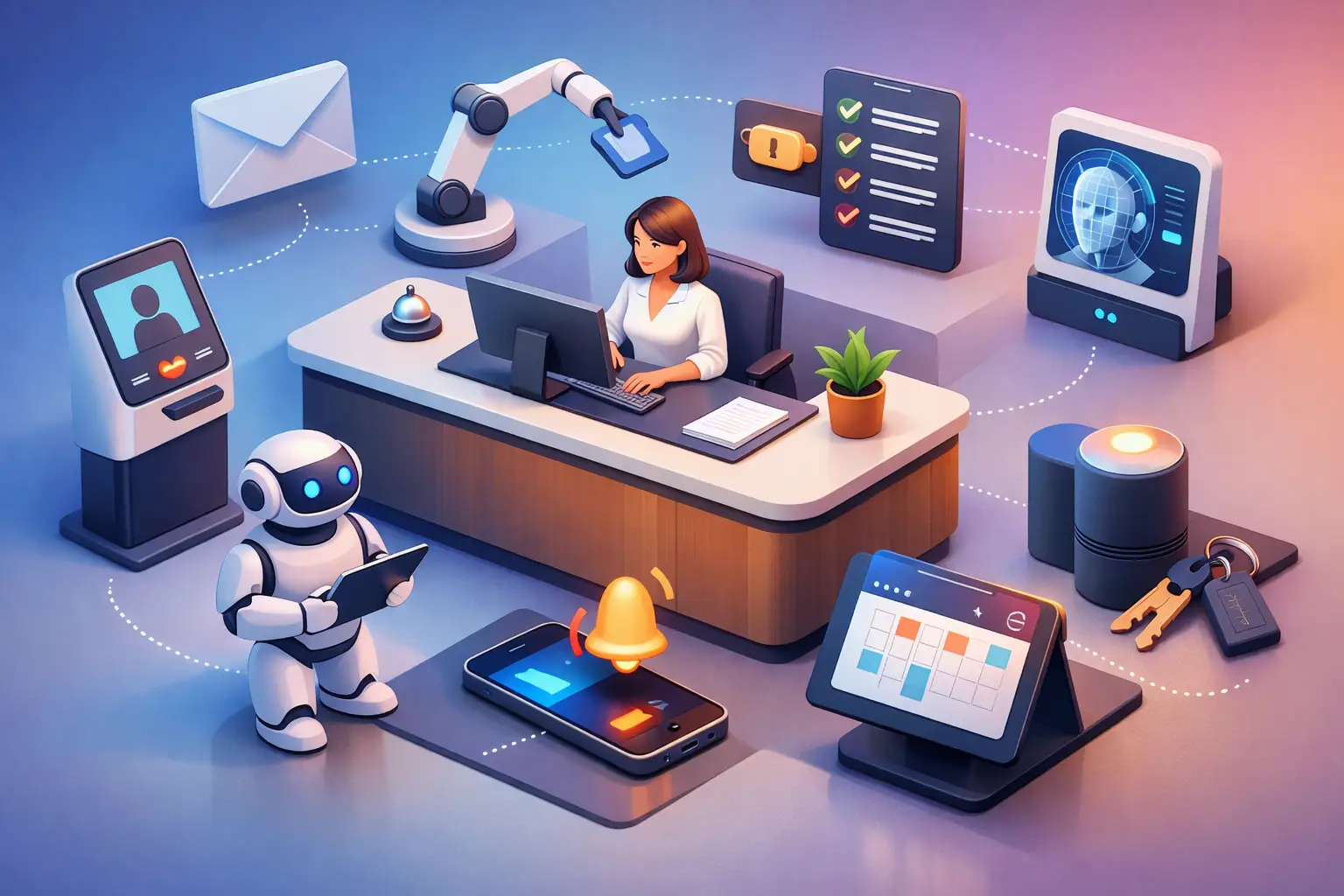
A missed call at 4:47 PM can turn into a lost appointment, a delayed response, or a customer who books elsewhere before your team opens the next morning. That is why front desk automation trends matter right now. They are not about replacing every human interaction. They are about making sure inquiries get answered, appointments get scheduled, and follow-up happens consistently even when your staff is busy.
For appointment-driven businesses, the front desk is not just an admin function. It is part of revenue operations. When call volume spikes, when staff is out, or when after-hours inquiries come in, the gap usually shows up in missed bookings, slower response times, and more manual cleanup work. The current wave of automation is focused on closing that gap with practical systems that handle reception tasks reliably.
Front desk automation trends are moving toward full coverage
The biggest shift is simple. Automation is no longer being used only for overflow or basic FAQ handling. More businesses now expect front-desk systems to provide consistent coverage across the full inquiry lifecycle, from the first inbound call or message through scheduling, confirmation, and follow-up.
That change matters because the old model had obvious limits. A phone tree could route calls, and a website form could collect information, but neither handled the actual front-desk workload very well. Modern systems are expected to answer common questions, capture lead details, route urgent requests, and book appointments without forcing customers to wait for office hours.
For service businesses, this means evaluating automation less like a convenience feature and more like staffing infrastructure. If a tool cannot reliably handle inbound demand when your team is unavailable, it is not solving the real problem.
1. AI reception is replacing fragmented front-desk tools
A clear trend is the move away from stacking separate tools for phones, forms, reminders, and lead capture. Businesses are looking for one automation layer that can answer inquiries, collect context, and move people toward a booked appointment.
This is partly a cost issue, but mostly an operations issue. Fragmented tools create handoff failures. A caller leaves a message, someone transcribes it later, another person follows up, and by then the opportunity has cooled off. AI receptionist systems are being adopted because they reduce those breaks in the process.
The trade-off is that not every business needs the same level of workflow depth. A solo practice with straightforward scheduling may need fast and accurate call handling. A larger office may need routing logic, escalation rules, and appointment-type specific workflows. The trend is not just toward more automation. It is toward automation that behaves like an actual front-desk function.
2. Speed-to-lead is becoming the main buying factor
Many buyers used to evaluate front-desk software by asking whether it saved staff time. That still matters, but speed-to-lead is becoming the stronger business case. If your office misses an inquiry and responds two hours later, that delay has a direct conversion cost.
This is especially true for businesses where customers contact multiple providers at once. The first competent response often wins the appointment. Front-desk automation is increasingly designed around immediate engagement, not just message capture.
That changes what decision-makers should look for. It is not enough for a system to log an inquiry. It needs to respond in real time, gather the right details, and either book the appointment or move the person into the next step without friction. The value is measured in recovered opportunities, not just reduced admin workload.
3. Scheduling automation is getting more operationally precise
Scheduling used to be treated as a simple calendar task. The newer trend is more nuanced. Businesses want automation that respects actual operational constraints such as appointment types, availability rules, lead times, service durations, and confirmation requirements.
That is a meaningful shift because bad scheduling automation can create as much work as it removes. If appointments are booked into the wrong slots, if intake details are incomplete, or if rescheduling is clumsy, staff still end up doing manual correction.
The systems gaining traction now are the ones that fit existing scheduling logic instead of forcing businesses into generic booking flows. For a busy office manager, that is the difference between useful automation and another system to supervise.
4. After-hours reception is becoming standard, not optional
One of the strongest front desk automation trends is the expectation of 24/7 responsiveness. Customers do not stop searching for providers at 5 PM, and they do not care whether your team is already gone for the day. If they call, text, or submit a question at night, they still expect an answer.
That does not mean every business needs live human coverage around the clock. It does mean they need a reliable way to acknowledge inquiries, collect intent, and guide the customer toward the next action. For many appointment-driven businesses, after-hours demand is where automation delivers the clearest return.
This is also where staffing economics become obvious. Extending front-desk coverage with people is expensive and difficult to manage. Extending it with the right automation is far more practical, provided the experience is clear and competent.
5. Confirmation and follow-up workflows are getting more attention
Booking the appointment is only part of the front-desk job. Confirmations, reminders, reschedules, and follow-up messages are where a lot of operational leakage happens. Businesses are increasingly looking at automation as a way to keep those communications consistent without adding repetitive work to the day.
This trend matters because no-show prevention and customer communication quality are tied closely together. A front desk that books well but follows up inconsistently still creates avoidable revenue loss.
The best systems now support ongoing communication workflows rather than stopping at the initial interaction. That creates a more complete automation model: answer the inquiry, schedule the appointment, confirm it, and keep the customer informed. For many service businesses, that is where the labor savings and customer experience gains start to compound.
6. Businesses want automation that sounds competent, not clever
There is less patience now for front-desk tools that feel experimental. Buyers do not want novelty. They want predictable performance. That is changing how automation is selected and deployed.
In practice, this means businesses are prioritizing systems that communicate clearly, stay on task, and handle receptionist duties with consistency. A flashy AI experience may get attention once. A dependable one reduces missed calls, captures more appointments, and lowers training overhead every day.
This is an important distinction. General-purpose AI tools can be impressive, but front-desk operations usually benefit more from specialized systems built for inbound communication and scheduling. That focused approach tends to produce better outcomes because the workflows are narrower, clearer, and easier to measure.
7. Reporting is shifting from activity metrics to booking outcomes
A final trend is how success is measured. Businesses are moving past surface-level metrics like call counts or message volume. They want to know how front-desk automation affects booked appointments, lead capture rates, response times, and staff workload.
That is a healthier way to evaluate performance. If automation handles a high number of interactions but does not improve throughput, it is not doing enough. Decision-makers want evidence that the system is protecting revenue and making the office run better.
This also helps with rollout decisions. When you can measure how many inquiries were answered, how many appointments were scheduled, and how much manual work was avoided, it becomes easier to decide where to expand automation and where human intervention still adds the most value.
How to evaluate these front desk automation trends in your business
The practical question is not whether automation is advancing. It is whether your current front-desk setup is losing opportunities. If your team misses calls during peak hours, if appointment follow-up is inconsistent, or if after-hours inquiries sit untouched until morning, the gap is already costing you.
Start with the highest-friction moments. That usually means inbound call handling, appointment scheduling, and confirmation workflows. Then look at where staff time is being spent on repetitive communication that does not require judgment. Those are often the best areas for automation first.
It also helps to be honest about complexity. Some businesses need a straightforward system that answers every inquiry and books cleanly. Others need layered routing, custom scheduling rules, and more oversight. The right answer depends on call volume, appointment flow, and how much variation exists in the front-desk process.
A specialized solution like Ortuas fits this shift because it is built around the actual work reception teams do: answering inbound inquiries, handling appointments, and keeping customer communication moving without gaps. That narrow focus is increasingly where the market is heading.
The businesses that benefit most from these trends are usually not chasing new tech for its own sake. They are tightening operations where revenue is won or lost. If your front desk is still relying on voicemail, callback lists, and manual follow-up to keep up, the next upgrade is not more effort. It is better coverage.
Get tips like this in your inbox
We send practical guides on AI, automation, and growing your service business. No spam.