Can AI Schedule Appointments by Phone?
June 17, 2026
Can AI schedule appointments by phone? Yes - if it can answer, qualify, book, confirm, and follow your rules without dropping calls.
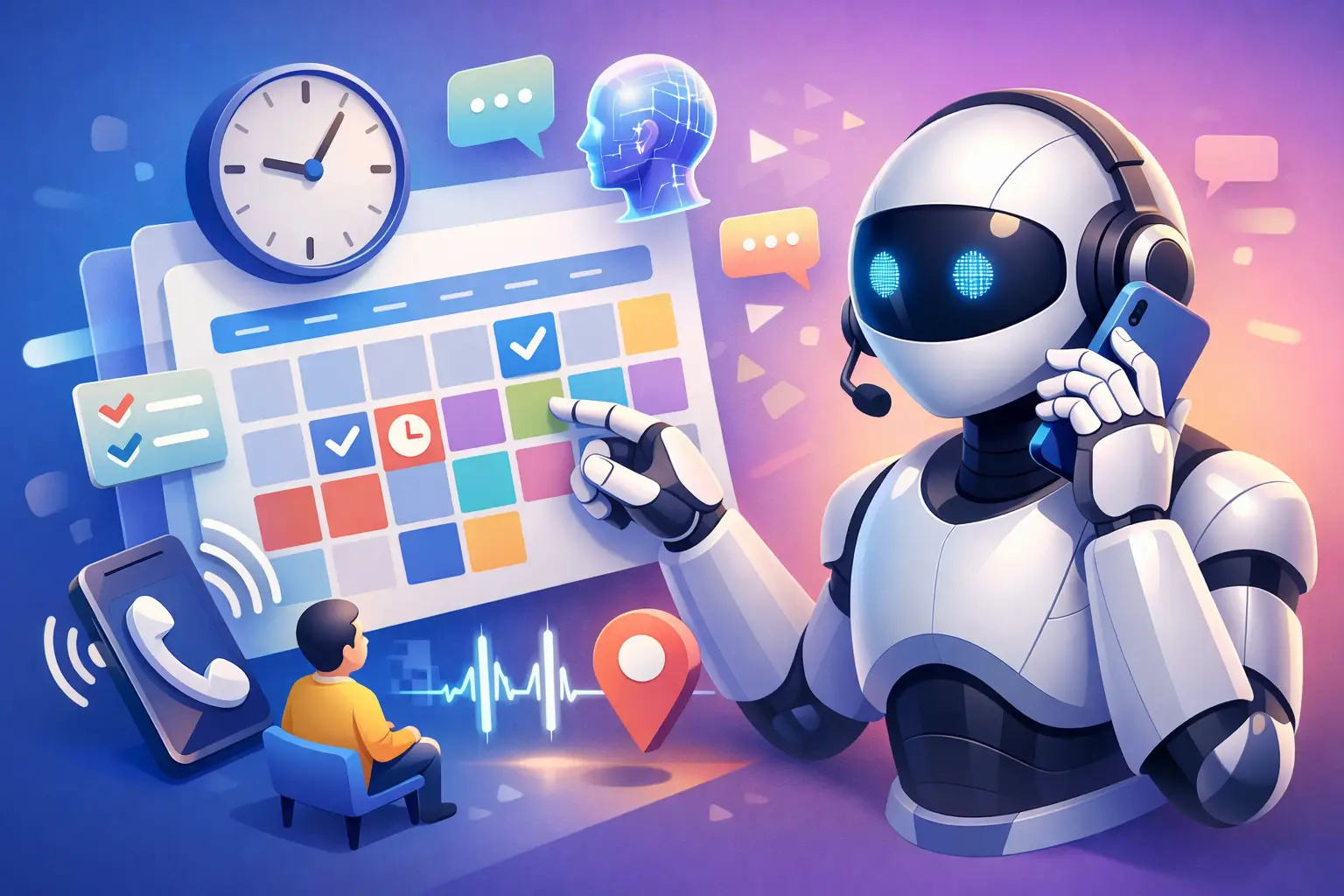
A missed call at 4:47 p.m. can turn into a lost appointment by 4:49. That is the real reason business owners ask, can AI schedule appointments by phone? They are not looking for a novelty. They want to know whether an automated receptionist can answer consistently, book accurately, and keep the front desk from becoming a bottleneck.
The short answer is yes. AI can schedule appointments by phone, and in many appointment-driven businesses, it can do it faster and more consistently than an overextended front desk. But the useful answer is more specific: AI works well when scheduling follows clear rules, common customer questions, and a defined booking workflow. It performs less well when every call requires judgment, negotiation, or complex exception handling.
Can AI schedule appointments by phone in a real business?
Yes, if the system is built for receptionist work rather than generic chat. A phone-based AI receptionist can answer inbound calls, understand why the customer is calling, collect booking details, offer available times, confirm the appointment, and trigger follow-up communication. In practical terms, that means fewer missed calls, fewer voicemails, and more appointments captured while staff focus on in-person work.
For service businesses, that matters because scheduling is often the first conversion point. If a caller has to wait, repeat themselves, or call back later, booking rates drop. An AI receptionist does not take lunch, does not get pulled into side tasks, and does not leave calls unanswered after hours.
That does not mean every phone interaction should be fully automated. Some businesses need a handoff path for high-value leads, urgent requests, billing disputes, or unusual service questions. The strongest setup is usually a hybrid one: AI handles the repeatable scheduling flow, while staff step in for exceptions.
What AI appointment scheduling by phone actually does
When people hear "AI," they often imagine something vague. In a scheduling context, the job is concrete. The system answers the phone, identifies intent, and follows a defined process.
A capable AI receptionist can ask what service the caller needs, whether they are a new or existing customer, and what time works best. It can check scheduling availability, offer open slots, confirm the selected appointment, and send follow-up confirmations by text or email. It can also answer common pre-booking questions such as hours, location, required paperwork, or whether a service is available.
This is where many businesses see immediate value. Instead of staff juggling ringing phones while helping people at the counter, the AI handles call volume consistently. That improves response time and reduces the administrative drag that builds up across the day.
For a busy office, even small efficiencies compound. If staff recover ten interrupted minutes here and five missed callbacks there, that can translate into better throughput, shorter hold times, and fewer lost opportunities.
Where phone scheduling AI works best
The best fit is a business with frequent inbound calls and fairly structured appointment rules. Think practices, service providers, and local operations where customers commonly call to ask availability, request service, reschedule, or confirm details.
In these environments, the process is predictable. The AI does not need to invent a solution. It needs to follow your booking logic accurately and every time. That is what automation does well.
This is especially useful for businesses where phone coverage breaks down during peak hours, after hours, weekends, or when the front desk is handling walk-ins. The economic case is straightforward. If missed calls are costing appointments, consistent phone coverage affects revenue, not just convenience.
It can also be a strong fit for multi-location operations or offices trying to standardize front-desk quality. A well-configured AI receptionist gives each caller the same intake process, same scheduling rules, and same confirmation steps, regardless of when they call.
The limits: when it depends
AI can schedule appointments by phone, but not every workflow should be automated end to end. The biggest variable is complexity.
If your scheduling rules are simple, AI tends to perform well. If your team frequently makes judgment calls based on medical urgency, custom pricing, disputed account status, or highly nuanced service needs, then automation should stop earlier and route the caller to a person.
Another limit is bad operational design. If your calendar rules are inconsistent, your service types are unclear, or your intake questions change from one staff member to another, AI will expose that mess quickly. The issue is not that the technology cannot schedule. It is that the workflow was never truly standardized.
There is also a customer experience factor. Some callers are perfectly comfortable booking with an automated receptionist. Others want reassurance from a human, especially in sensitive or high-value situations. That is why escalation paths matter. Good AI should not trap callers. It should handle the routine work and transfer confidently when needed.
What to look for if you want AI to schedule by phone
The wrong question is whether AI sounds impressive. The right question is whether it can operate like a reliable front desk.
Start with call handling. The system should answer quickly, recognize appointment intent, and move the caller through booking without unnecessary friction. It should be able to capture names, callback numbers, appointment type, and preferred times accurately.
Then look at scheduling control. The AI needs access to real availability and clear booking rules. It should know appointment durations, buffers, business hours, service categories, and when to avoid overbooking. If rescheduling and cancellations are common, it should support those too.
Confirmation matters just as much as booking. A scheduled appointment is not fully secured until the customer gets a clear confirmation and, ideally, a reminder. That reduces no-shows and cuts down on preventable inbound calls.
Reporting is another operational requirement. If you cannot see how many calls were answered, how many appointments were booked, where handoffs happened, and when callers dropped off, you cannot improve the system. Business owners should expect visibility into performance, not a black box.
How to evaluate whether it will work in your office
Before adopting any phone scheduling AI, map the actual front-desk workflow. Not the ideal one - the real one. Look at when calls are missed, which appointment types come in most often, how many calls require only basic scheduling, and where staff spend time repeating the same information.
Then separate routine bookings from exception cases. If a large share of calls follows a repeatable script, there is a strong automation opportunity. If most calls are edge cases, start smaller by using AI for after-hours coverage, overflow calls, or basic intake before staff follow up.
It also helps to define what success means operationally. For some businesses, it is higher booking conversion. For others, it is reduced voicemail, shorter hold times, lower admin burden, or more consistent after-hours coverage. If you know the metric, you can judge the rollout clearly.
This is where a receptionist-focused platform matters. A generic bot may answer questions, but that does not mean it can manage live phone scheduling in a way that supports front-desk operations. Ortuas is designed around that specific function: answering inquiries, handling appointments, and keeping customer communication moving without adding staffing overhead.
Common concerns from operators
One concern is whether callers will resist talking to AI. Some will notice, and some will not care as long as the call is handled quickly and correctly. In many service settings, callers care more about getting an appointment than who says hello.
Another concern is accuracy. That is a fair question. Accuracy depends less on the label "AI" and more on system design, booking rules, and integrations. A poorly set up human front desk can misbook appointments all day. A well-configured automated receptionist can be more consistent because it follows the same process every time.
There is also concern about losing the human touch. That depends on where you place automation. If AI handles routine scheduling and your team focuses on complex conversations and in-person care, the customer experience can improve rather than decline. Staff are less rushed, and callers get faster responses.
The practical view is simple. If your business depends on appointments, then call handling is part of revenue operations. Phone scheduling AI is not there to imitate a human for its own sake. It is there to answer every inquiry, move callers into booked time slots, and reduce the work that keeps your staff tied to the phone.
That is the standard to use. Not whether the technology feels futuristic, but whether it helps your office capture more appointments with less friction. If it does that reliably, it is already doing the job that matters.
Get tips like this in your inbox
We send practical guides on AI, automation, and growing your service business. No spam.