AI Receptionist for Veterinary Clinic Teams
April 20, 2026
See how an ai receptionist for veterinary clinic teams reduces missed calls, books more appointments, and keeps front-desk workflows consistent.
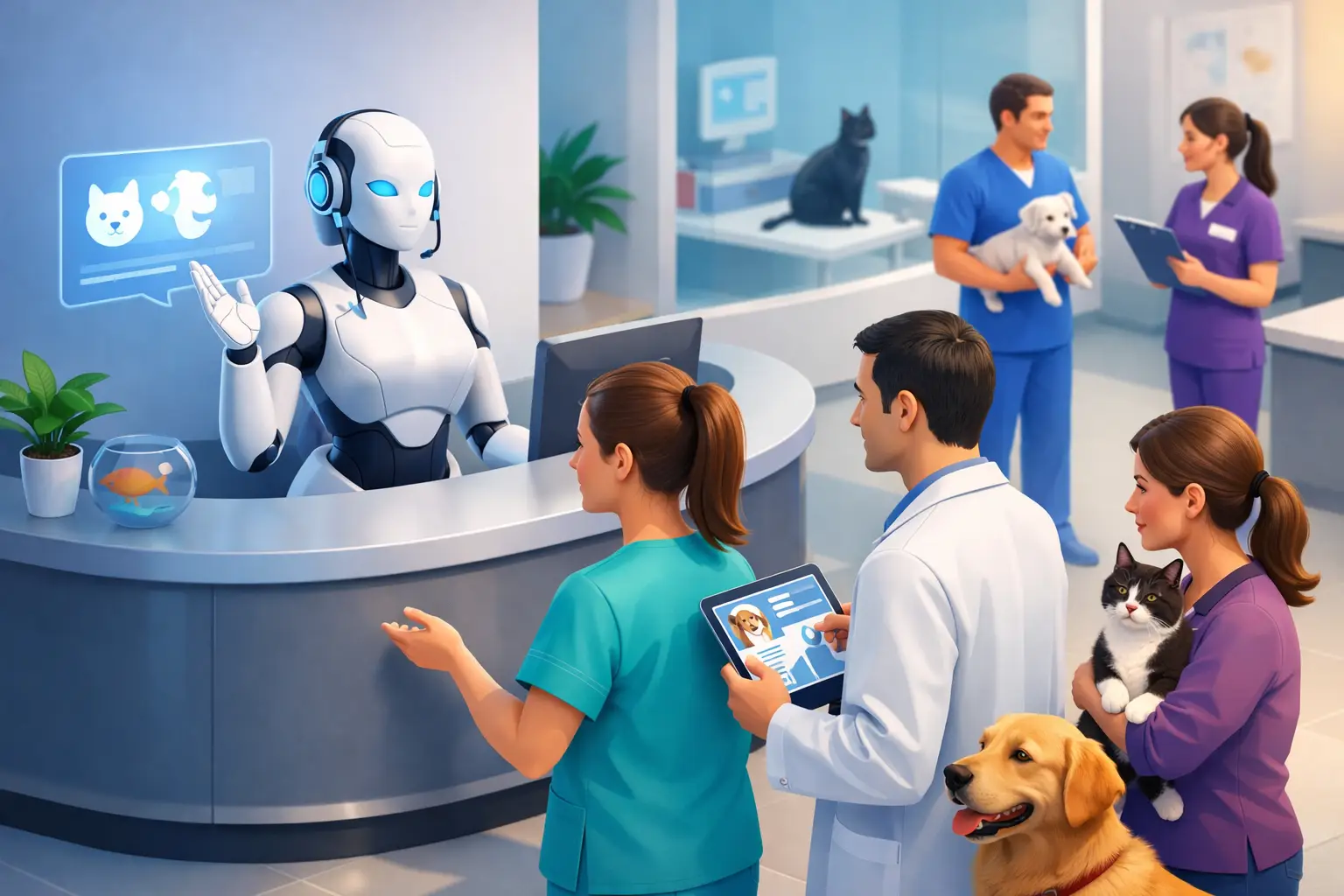
Monday at 8:03 a.m. is when a veterinary front desk gets tested. Overnight voicemails are stacked up, appointment requests are coming in, a client needs vaccine records, another wants to reschedule, and someone is calling about a sick pet and needs direction fast. An ai receptionist for veterinary clinic operations is built for exactly this pressure point - capturing every inquiry, handling routine scheduling, and keeping communication moving when staff are already at capacity.
For veterinary practices, the front desk is not just an administrative function. It is the first filter for urgency, the control point for the daily schedule, and a major factor in whether appointments are booked or lost. When calls go unanswered or messages pile up, the result is not only a poor client experience. It is also lower appointment throughput, more manual catch-up work, and more strain on the team.
What an AI receptionist for veterinary clinic workflows actually does
A veterinary clinic does not need a general chatbot that tries to do everything. It needs reception coverage that handles the work a front desk handles every day. That usually means answering inbound calls or messages, collecting client details, responding to common questions, confirming appointment availability, and moving requests into the right scheduling flow.
An AI receptionist for veterinary clinic teams can take care of high-volume, repeatable interactions such as new appointment requests, follow-up booking, cancellations, reschedules, hours, location details, and basic service questions. It can also route more sensitive or urgent situations to staff based on rules the clinic defines.
That distinction matters. In veterinary medicine, not every inbound inquiry should be treated the same way. A nail trim request and a possible toxin ingestion call cannot sit in the same queue. The value of a receptionist system comes from how well it separates routine scheduling from higher-priority communication, while still ensuring every caller gets a response.
Why veterinary clinics feel the gap at the front desk
Veterinary practices are especially vulnerable to missed front-desk opportunities because demand is uneven. There are predictable surges at opening, lunch, and late afternoon, but there are also unexpected spikes driven by urgent care, surgery updates, prescription questions, and seasonal demand. Staffing for peak communication volume all day is expensive. Staffing only for average volume means calls get missed when demand jumps.
That is where automation has practical value. Not as a replacement for clinical judgment, and not as a blanket substitute for every human interaction, but as a dependable layer that keeps intake and scheduling from breaking down when the phones get busy.
There is also the after-hours problem. Pet owners often call when they are off work, which means early morning, evening, or weekend inquiries can represent real booking demand. If those calls roll to voicemail and sit until the next day, some percentage of that demand disappears. The client may call another clinic, postpone care, or abandon the request. An always-on receptionist function helps prevent that leakage.
The biggest operational wins
The clearest gain is fewer missed calls. That sounds basic, but in appointment-driven businesses, responsiveness directly affects revenue. If a clinic receives a steady flow of inbound inquiries and only converts the ones staff can answer in real time, the front desk becomes a bottleneck.
The second gain is schedule protection. A clinic team should not spend large parts of the day answering the same logistical questions or manually handling every reschedule request. When routine traffic is handled automatically, staff can focus on in-person clients, clinical coordination, and exceptions that actually need human judgment.
The third gain is consistency. Human reception performance varies by shift, workload, and turnover. An AI receptionist does not forget to ask for contact information, skip confirmation steps, or leave a message unresolved because the desk got slammed. For operators, that consistency is often as valuable as the labor savings.
Where AI fits well in a veterinary setting
Veterinary clinics tend to have a mix of predictable and sensitive interactions. That makes them a strong fit for receptionist automation, as long as the role is clearly defined.
It fits well for appointment requests, reminders, confirmations, intake collection, routing basic service questions, and handling overflow communication during busy periods. It also fits when a practice wants to extend front-desk coverage without adding another full-time hire.
It fits less well when the conversation requires clinical interpretation, emotional support in a difficult medical situation, or a nuanced discussion about treatment decisions. Those are not receptionist tasks in the first place. A good system should recognize that boundary and hand those interactions off cleanly.
This is the practical view operators should take. The question is not whether AI can handle every conversation. It cannot, and it should not. The question is whether it can reliably handle the repeatable front-desk workload that consumes staff time and causes missed opportunities when left unmanaged. In many clinics, the answer is yes.
What to look for in an AI receptionist for veterinary clinic use
The first requirement is appointment handling. If the system cannot support scheduling workflows in a structured way, it is not solving the real front-desk problem. Veterinary practices need more than message-taking. They need a tool that can capture booking intent, gather the right details, and move the client toward a confirmed appointment.
The second requirement is communication control. The clinic should be able to define what gets answered automatically, what gets escalated, and what gets routed to specific staff. This is especially important for urgent or medically sensitive inquiries.
The third requirement is reliability across channels and time periods. The real operational benefit comes from consistent coverage, not occasional help. That means handling the overflow during busy hours and maintaining responsiveness after hours when staff are unavailable.
The fourth requirement is a receptionist-first design. Many AI products are positioned as broad support tools. That sounds flexible, but it often creates unnecessary complexity. Veterinary clinics usually do better with a focused system built around lead capture, scheduling, confirmations, and routine communication workflows. That is where solutions like Ortuas are differentiated - the product is designed to function as a dependable reception layer, not a generic AI add-on.
The trade-offs veterinary practices should think through
Automation is not a blank check. A clinic should be realistic about setup, rules, and oversight. The better the front-desk process is defined, the better the outcome will be. If scheduling rules are inconsistent or escalation paths are unclear, automation will expose that weakness rather than fix it.
There is also a client experience consideration. Some pet owners want immediate, direct help from a person, especially in stressful situations. That is why the handoff model matters. The best use of AI at the front desk is to speed up routine communication and reduce waiting, while making it easy to reach staff when the situation calls for it.
Another trade-off is workflow ownership. Someone at the clinic needs to decide what the receptionist should handle, what it should ask, and when it should escalate. That is not a major burden, but it is a real implementation step. Practices that treat deployment as an operational project, not just a software purchase, usually get better results.
How to measure whether it is working
The right metrics are straightforward. Start with missed call rate, response time, appointment conversion from inbound inquiries, and front-desk workload tied to repetitive communication. If those numbers improve, the system is doing its job.
It also helps to watch schedule quality. Are more appointments being confirmed cleanly? Are fewer requests sitting unresolved? Is staff spending less time on repetitive phone work? These are operational indicators that matter more than novelty.
Client feedback matters too, but it should be interpreted carefully. The goal is not to force every interaction into automation. The goal is to make the clinic easier to reach, faster to book with, and more consistent in follow-up. If clients are getting answers faster and staff are less overloaded, that is a strong sign the reception model is improving.
A practical standard for adoption
For most veterinary clinics, the case for an AI receptionist is not about technology trends. It is about front-desk coverage. If the practice is missing calls, losing appointment requests after hours, or pulling staff away from higher-value work just to keep up with scheduling traffic, there is a clear operational problem to solve.
An AI receptionist for veterinary clinic teams works best when it is treated as infrastructure. It should quietly capture inquiries, support scheduling, and keep communication consistent in the background. Not flashy. Not experimental. Just dependable.
That is the standard worth using: if the system helps your clinic answer more inquiries, book more appointments, and reduce front-desk strain without creating confusion, it is doing what reception technology should have been doing all along.
Get tips like this in your inbox
We send practical guides on AI, automation, and growing your service business. No spam.