AI Receptionist for HVAC Companies
April 26, 2026
See how an ai receptionist for hvac companies helps capture calls, book jobs faster, reduce missed leads, and keep scheduling moving 24/7.
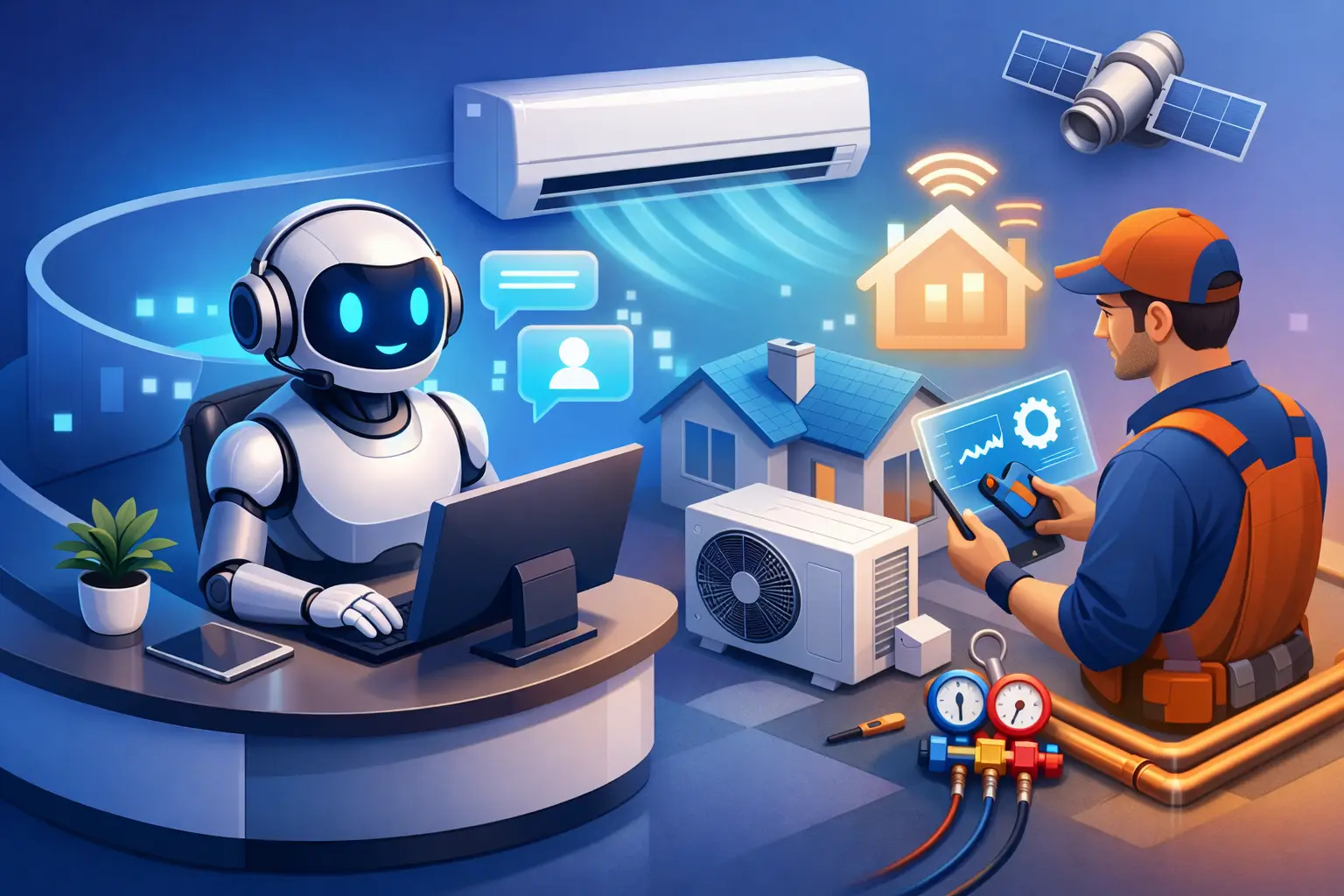
When an HVAC prospect calls, they usually need help now - not after lunch, not when the office opens, and not after a dispatcher finishes a stack of callbacks. That is exactly why an ai receptionist for hvac companies is becoming less of a nice-to-have and more of an operations decision. If the phone is not answered, the job often goes to the next contractor.
HVAC businesses live on speed, coverage, and coordination. Calls come in during active jobs, after hours, during lunch, and during weather spikes when the office is already overloaded. A missed call is not just a missed conversation. It can mean a lost service call, a delayed replacement estimate, or a maintenance customer who never books again.
An AI receptionist solves a narrow but expensive problem. It answers inbound calls, captures customer details, responds to common questions, and moves people into the scheduling process without waiting for a human receptionist to be available. For HVAC companies, that matters because the front desk is often the first bottleneck in the revenue cycle.
Why HVAC companies lose revenue at the phone line
Most HVAC operators do not have a marketing problem first. They have a response problem. Leads come in, but the office cannot always pick up fast enough. During peak seasons, call volume jumps. During slower periods, teams try to stay lean, which means fewer people covering the phones. Either way, the same issue shows up: inconsistent call handling.
That inconsistency creates real operational drag. New customers want to know if you serve their area, how soon someone can come out, and whether financing or maintenance plans are available. Existing customers want to reschedule, confirm appointments, or report an urgent issue. If those calls hit voicemail, many will not leave a message. They will call another company.
Even when calls are answered, quality can vary. A busy CSR might rush through intake, miss a key detail, or forget to confirm the next step. An overwhelmed office manager might delay callbacks until the end of the day. None of this looks dramatic in the moment, but over a month it adds up to lost bookings, lower conversion, and more friction for field teams.
What an ai receptionist for hvac companies actually does
The most useful way to think about this tool is not as a chatbot with a phone number. It is a reception layer built for call coverage and appointment flow.
An AI receptionist answers inbound inquiries immediately, gathers the customer's name, address, issue, and preferred timing, and routes that information into the right workflow. It can handle first contact for new leads, manage routine appointment requests, confirm details, and keep communication consistent when the office is busy or closed.
For HVAC companies, that means the system can support the most common front-desk tasks that consume time but do not always require a live team member. It can collect service request information, identify whether the caller is new or existing, and move basic scheduling conversations forward. It can also help reduce the back-and-forth that happens when office staff must manually chase incomplete details.
This is where the business case gets stronger. The value is not only that calls get answered. The value is that customer communication becomes more consistent, intake becomes more structured, and scheduling workflows stop depending entirely on who happens to be free in the office.
Where it helps most in day-to-day HVAC operations
After-hours coverage is the obvious use case, but it is not the only one. Many HVAC companies lose just as many opportunities during business hours because staff are on another line, helping walk-in customers, or dealing with dispatch changes.
An AI receptionist helps smooth those gaps. It gives every inbound caller an immediate response, even when the internal team is tied up. That matters for emergency calls, but it also matters for quote requests, tune-up bookings, and reschedule requests that would otherwise pile up.
It is especially useful in three situations. The first is seasonal demand spikes, when incoming volume rises faster than office staffing can keep up. The second is lean operations, where one or two people are covering phones, scheduling, and customer follow-up at the same time. The third is growth, when a company is generating more leads but has not yet built a larger front-desk team.
In each case, the goal is the same: capture demand without adding the full cost and management burden of another receptionist shift.
The operational benefits are bigger than call answering
The headline benefit is fewer missed calls, but HVAC companies usually feel the impact elsewhere first.
Scheduling moves faster because customer details are collected upfront in a consistent format. Office staff spend less time returning calls just to ask for basic information. Dispatch has cleaner intake notes. Customers get clearer confirmation about what happens next.
There is also a labor efficiency gain. A human receptionist is still valuable for escalations, exceptions, and high-touch conversations. But not every inbound call needs that level of attention. When routine inquiries and appointment intake are handled automatically, internal staff can focus on priority work instead of acting as a constant overflow line.
Another benefit is consistency. Human teams vary by shift, training, and workload. An AI receptionist does not forget to ask for the address, skip a callback detail, or sound rushed because five other calls are waiting. For brands that care about service quality, that kind of standardization matters.
What to evaluate before choosing an AI receptionist
Not every AI phone tool is a good fit for HVAC. Some systems are built for broad customer support and are too generic for appointment-driven service businesses. HVAC operators should look for something built around reception performance, not general conversation.
The first question is whether it can reliably handle inbound lead capture and appointment workflows. If the system answers calls but does not move customers toward booking, it is not solving the real problem.
The second question is how well it supports your actual office process. HVAC scheduling can be messy. Emergency jobs, maintenance visits, estimates, and follow-ups do not all follow the same path. A good AI receptionist should fit the workflow you already run, not force your team into a rigid script.
The third question is handoff quality. Some calls should be routed to a person. Some should be logged for callback. Some should be handled fully at the reception layer. The tool needs clear rules so customers do not get stuck in a loop when they need a human answer.
It also helps to be realistic about trade-offs. AI reception works best for repeatable front-desk tasks. If your office relies heavily on highly customized scheduling conversations, you may still want staff involved earlier in the process. For many HVAC companies, the best model is not full replacement. It is a reliable first line of response that captures every inquiry and reduces avoidable manual work.
AI receptionist for HVAC companies vs hiring more front-desk staff
Hiring solves some problems, but it creates others. More staff can increase coverage, but staffing also means recruiting, training, turnover risk, payroll cost, and uneven performance across shifts. If call volume is unpredictable, that cost can be hard to justify.
An AI receptionist gives HVAC companies a different option. Instead of adding headcount just to cover overflow, after-hours calls, or routine scheduling traffic, the business can automate those interactions and let human staff focus on exceptions and higher-value coordination.
That does not mean people disappear from the process. It means people spend less time on repetitive intake and more time on service recovery, customer retention, dispatch coordination, and revenue-producing follow-up.
For many operators, that is the better economic decision. They are not trying to build a larger front desk. They are trying to protect revenue, maintain response speed, and keep the schedule full without adding another layer of labor overhead.
What successful implementation looks like
The best results come when HVAC companies treat AI reception as part of operations, not as a side experiment. That means defining which call types should be handled automatically, which should be routed, and what information must always be captured.
It also means measuring the right outcomes. Look at missed call rates, booking conversion, speed to response, and the amount of manual scheduling work your office is still doing. If those numbers improve, the system is doing its job.
This is also where a specialist approach matters. A provider focused on receptionist workflows will usually be better aligned with what service businesses actually need: dependable coverage, structured intake, appointment handling, and clear communication. That is a more practical fit than broad AI platforms that promise everything but are thin on scheduling execution.
For HVAC companies, the real question is simple. How many calls can you afford to miss before the front desk becomes a growth problem? If the answer is not many, an AI receptionist is not about adding new technology for its own sake. It is about making sure every inbound opportunity gets a response, every customer gets a clear next step, and your office can keep up with demand without breaking under it.
The strongest systems are the ones customers barely notice because the experience feels immediate, organized, and dependable. That is what good reception should do, whether a person handles it or the process runs through software built for the job.
Get tips like this in your inbox
We send practical guides on AI, automation, and growing your service business. No spam.