7 AI Receptionist Booking Conversion Tactics
July 1, 2026
Use ai receptionist booking conversion tactics to cut missed calls, speed scheduling, and turn more inbound inquiries into confirmed appointments.
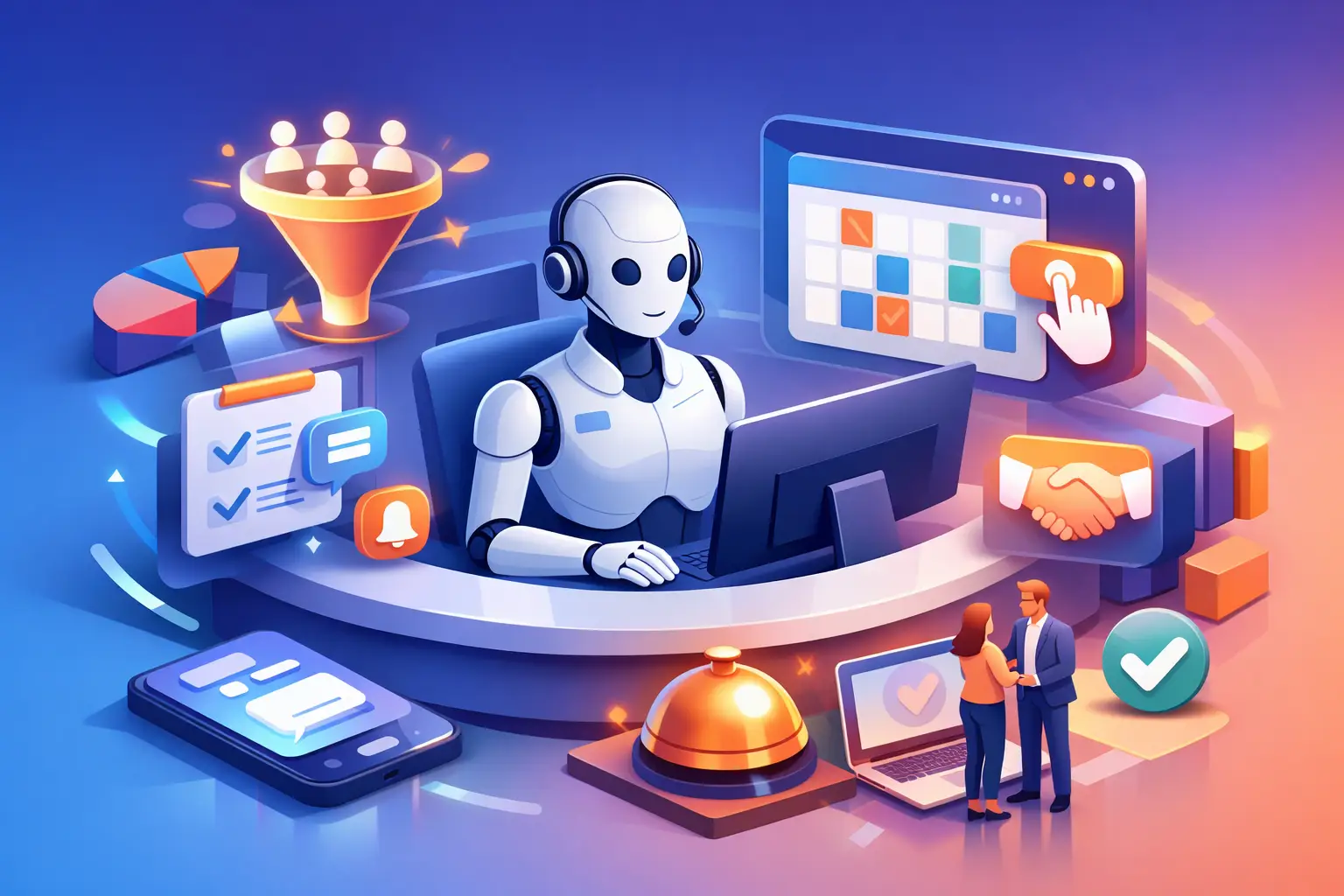
A missed call is not just a missed conversation. For most appointment-driven businesses, it is a lost booking window, a possible no-show later in the week, and unnecessary pressure on the front desk. That is why ai receptionist booking conversion tactics matter. They do not start with flashy automation. They start with one practical goal - getting more inbound inquiries to an actual confirmed appointment.
For owners, office managers, and operations leads, the issue is rarely lead volume alone. It is what happens between the first contact and the booked time slot. Calls come in during lunch. Web inquiries arrive after hours. Patients, clients, and customers ask basic questions before they commit. If your process introduces delay, inconsistency, or handoff friction, conversion drops fast.
The strongest AI receptionist setups improve booking conversion because they remove those weak points. They answer immediately, qualify intent, offer scheduling options, and keep the conversation moving. But results depend on how the workflow is designed. Here are seven tactics that have the biggest operational impact.
1. Treat speed to answer as a conversion lever
Many service businesses still think of reception as coverage. In practice, it is a conversion system. The faster an inquiry gets a useful response, the more likely that inquiry becomes a booked appointment.
This is especially true for high-intent callers. Someone calling a dental office, med spa, legal office, home services company, or clinic usually wants one of three things right away: availability, pricing context, or confirmation that you handle their issue. If they reach voicemail, wait on hold, or get told to call back later, the next step is often calling a competitor.
An AI receptionist improves this part of the funnel by responding instantly and consistently. That alone can lift booking rates, but only if the first interaction does real work. A fast greeting that still ends with "leave a message" is not a conversion tactic. A fast interaction that identifies need and moves directly into scheduling is.
2. Remove unnecessary questions before scheduling
A common front-desk problem is over-screening. Businesses ask too many questions before offering a time. That slows the conversation and creates drop-off.
The better approach is to collect only what is needed to route, qualify, and book. In many cases that means name, contact information, service type, preferred timing, and one or two business-specific qualifiers. Everything else can be gathered later through intake forms, confirmation workflows, or staff follow-up.
This is where AI receptionist booking conversion tactics outperform ad hoc phone handling. The system can be trained to distinguish between required booking data and nice-to-have details. That keeps the interaction short enough to hold attention while still producing a usable appointment.
There is a trade-off here. Some businesses genuinely need tighter screening before booking, especially in medical, legal, or technical service environments. But even then, the screening should support scheduling, not delay it. If you need more qualification, structure it so that the customer still feels progress toward an appointment.
3. Offer real scheduling options during the first interaction
If your receptionist workflow captures a lead but does not present appointment options, conversion is still at risk. The customer has shown intent. That is the moment to secure the booking.
A strong AI receptionist should be able to access scheduling logic, present available times, and confirm the appointment without forcing a manual callback. This matters after hours, during peak call periods, and whenever staff are already tied up.
The operational advantage is straightforward. You reduce the gap between inquiry and commitment. You also reduce the number of leads that require staff re-engagement just to finish a booking.
That said, real-time scheduling only works if your calendar rules are clean. If availability is outdated, double-booking risks go up. If buffer times are not built in, the schedule becomes harder to manage. Better conversion does not help much if it creates downstream chaos. Good booking tactics depend on accurate scheduling controls.
4. Use intent-based routing instead of one-size-fits-all scripts
Not every caller should go through the same path. New leads, existing customers, urgent service requests, and simple administrative questions have different conversion needs.
Intent-based routing helps the AI receptionist move people to the right outcome quickly. A new prospect asking about first-time availability should be pushed toward booking. An existing client needing to reschedule should be handled in a rescheduling flow. A billing question should not block incoming appointment demand.
This sounds basic, but many businesses lose bookings because every inquiry gets forced through a generic script. The result is longer calls, frustrated customers, and fewer appointments completed on the spot.
When workflows are segmented by intent, the front desk performs more like a revenue operation and less like a message center. That distinction matters. The goal is not simply answering everything. The goal is converting bookable demand efficiently while still handling the rest correctly.
5. Build follow-up into the conversion process
Not every inquiry books on the first interaction. That does not mean the lead is weak. It often means timing, uncertainty, or distraction got in the way.
A practical AI receptionist strategy includes structured follow-up for unbooked inquiries. If someone asks about services but does not commit, the system should trigger a callback request, text confirmation, reminder to schedule, or staff alert based on the context. If someone starts booking but drops off, that partial intent should not disappear.
This is one of the most overlooked conversion tactics because businesses assume booking is a live-call event only. It is not. A meaningful share of appointments are recovered through fast, consistent follow-up.
The key is restraint. Follow-up should feel helpful, not repetitive. Too many reminders can hurt trust. Too few let good leads go cold. The right cadence depends on the service type, urgency, and average booking window.
6. Reduce no-shows at the point of booking
Booking conversion does not stop when the appointment is placed on the calendar. If the customer does not show, the slot still fails commercially.
The best AI receptionist workflows support confirmed bookings with immediate confirmation messaging, reminders, and simple reschedule options. This is not just an operations detail. It protects conversion quality.
For example, if a caller books an appointment but leaves the interaction unclear on time, location, paperwork, or next steps, no-show risk climbs. The more your system can clarify expectations right away, the more likely the appointment holds.
There is also a customer experience benefit. Consistent confirmations make the business feel organized and responsive. That matters for trust, especially in sectors where customers may already feel uncertain or time-sensitive.
7. Measure conversion by stage, not just total bookings
Most businesses look at total appointments booked and stop there. That misses where the real performance issues are.
If you want better outcomes from AI receptionist booking conversion tactics, track the funnel in stages. Look at answer rate, qualified inquiry rate, booking offer rate, confirmed booking rate, and show rate. Those numbers tell you where workflow design is helping and where it is leaking demand.
For example, if answer rate is high but confirmed bookings are low, the issue may be scripting, qualification friction, or weak scheduling access. If bookings are strong but show rate is poor, your confirmation process likely needs work. If after-hours inquiries convert better than daytime calls, your staffed front desk may be introducing inconsistency rather than improving service.
This is where a specialized receptionist system has an advantage over patchwork phone coverage. You can standardize the interaction, compare performance over time, and adjust based on actual booking behavior. That makes conversion improvement operational, not anecdotal.
What separates good tactics from good results
The difference is implementation discipline. Businesses often expect an AI receptionist to improve conversion simply by being available 24/7. Availability helps, but it is only the first step. The system has to be configured around your booking logic, service mix, calendar rules, and customer questions.
It also has to reflect how your front desk should operate when things are not perfectly standard. What happens with urgent requests, limited availability, returning customers, or service-specific requirements? If those scenarios are not accounted for, the workflow may answer more inquiries without producing more completed appointments.
That is why the strongest setups are specific rather than generic. They are built to capture demand, route it correctly, and move it toward a scheduled outcome with as little friction as possible. For businesses that depend on appointments, that is not just an admin improvement. It is a direct revenue improvement.
Ortuas is built around that receptionist function specifically - answering inbound inquiries, handling appointment workflows, and maintaining consistent communication without adding front-desk headcount.
If you are evaluating your current process, start with one simple question: when a customer is ready to book, how many chances does your workflow give them to change their mind? The fewer those chances, the better your conversion system usually is.
Get tips like this in your inbox
We send practical guides on AI, automation, and growing your service business. No spam.